Safety is the foundation of everything we do. Whether we’re directing traffic, working above ground, or operating underground, every procedure and piece of equipment is guided by one principle:go home safe at the end of the day.
General Safety Rules
Daily SafetyMeeting: Review hazards, assignments, and emergency contacts.
PPE Check: Hard hat, hi-vis vest, gloves, boots, and eye protection.
Three Points of Contact when climbing equipment.
Use radios or hand signals clearly.
Stop immediately if conditions change or feel unsafe.
Stay hydrated and take breaks in extreme weather.
Flagging / Traffic Control
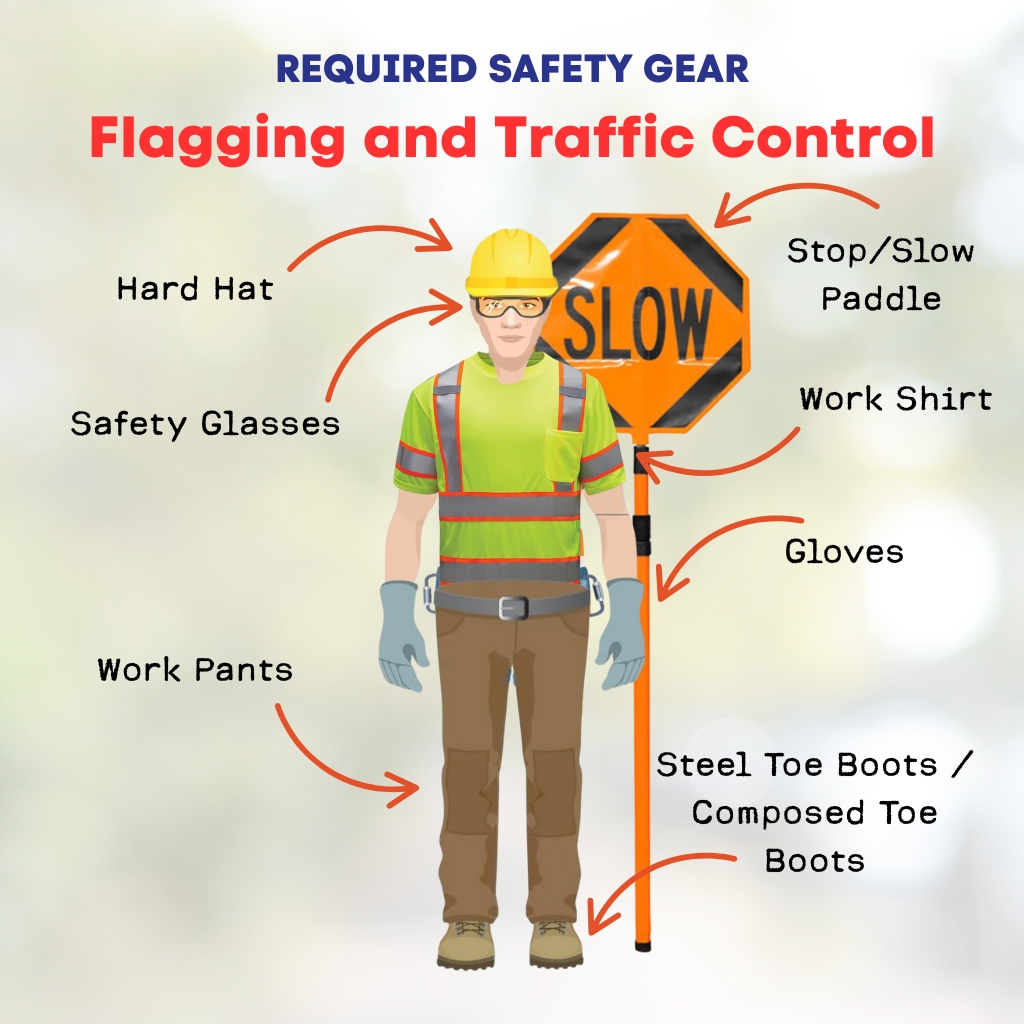
Required PPE
Hi-vis ANSI/ISEA-approved vest or jacket
Hard hat
Steel-toe boots / Composed toe boots
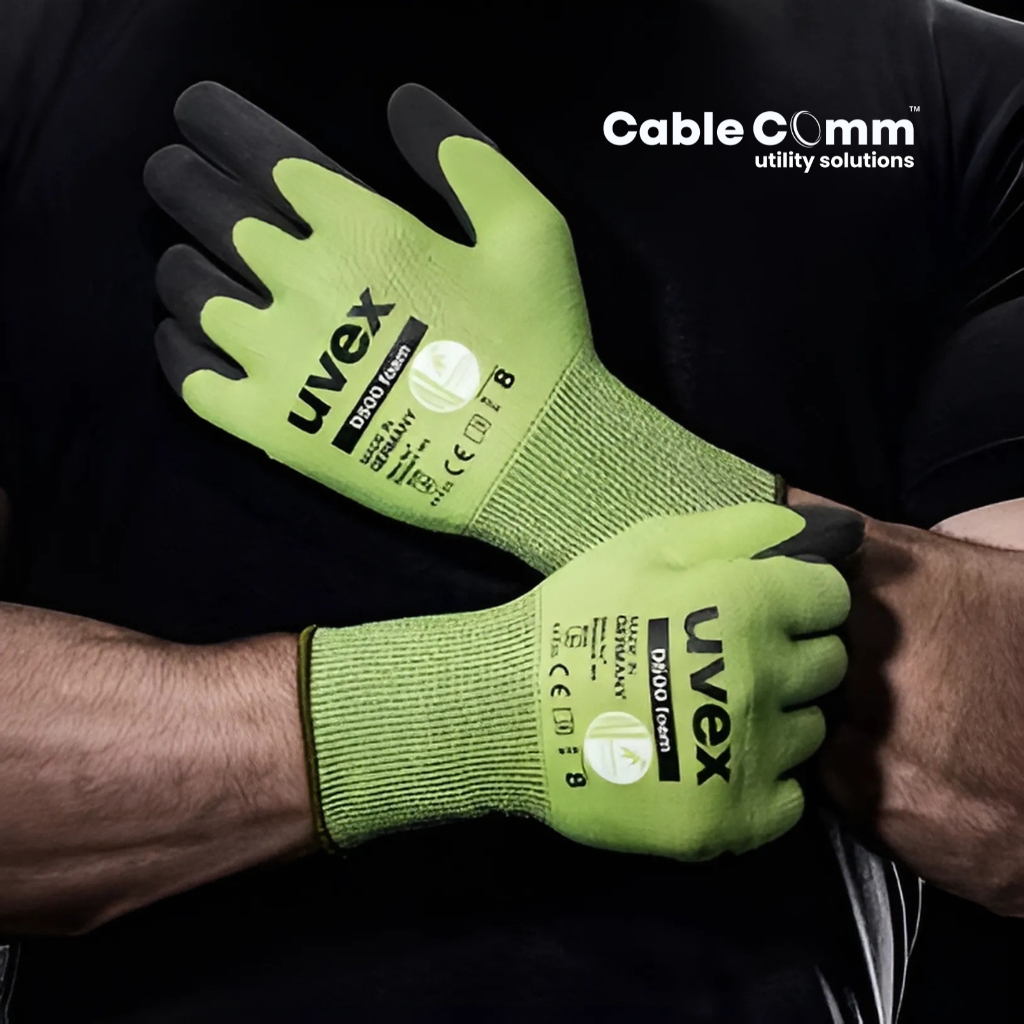
Safety gloves
Safety glasses (day/clear at night)
Weather-appropriate gear
Procedures
Set up the work zone per MUTCD standards.
Position yourself safely with escape routes.
Maintain communication with crew.
Stay visible and alert.
Control traffic smoothly and firmly.
Rotate positions to avoid fatigue.
Aerial Work
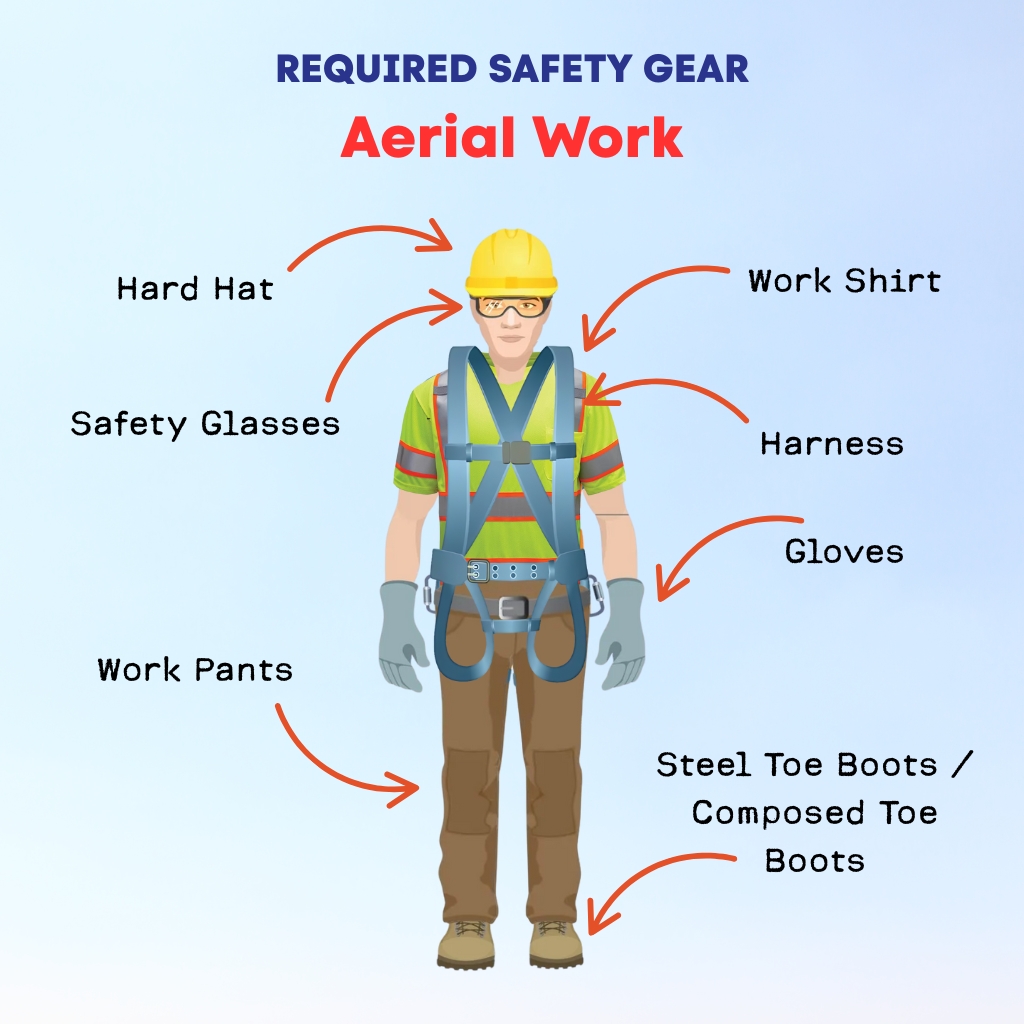
Required PPE
Hi-vis ANSI/ISEA-approved vest or jacket
Hard hat with chin strap
Steel-toe boots / Composed toe boots
Safety gloves
Safety glasses (day/clear at night) / Face shield
Weather-appropriate gear
Full body harness with lifeline
Procedures
Inspect equipment before use.
Set up stable ground with outriggers.
Tie-off before entering bucket.
Maintain 10ft clearance from power lines.
Never exceed load limits.
Keep both feet in the bucket.
Underground Work
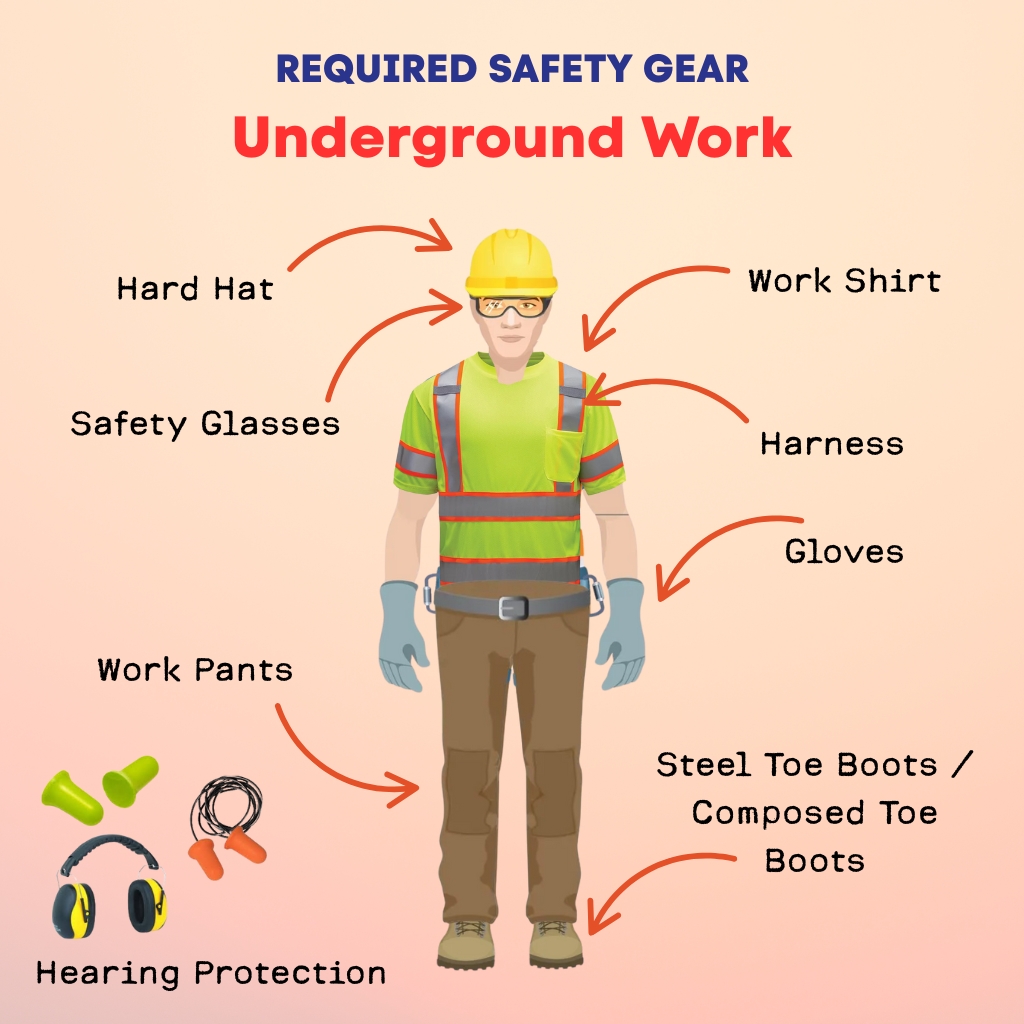
Required PPE
Hard hat (with light if required)
Safety glasses
Hi-vis vest
Cut-resistant gloves
Steel-toe boots
Respiratory protection (if required)
Procedures
Perform pre-entry air monitoring.
Use ventilation to ensure airflow.
Never enter alone, have an attendant.
Follow confined space entry permits.
Use trench boxes for trenches deeper than 5ft.
Maintain barricades around open areas.
Emergency Procedures
First Aid/CPR trained personnel on each crew.
Fire extinguishers available at every site.
Emergency contacts posted in each work truck.
Call 911 immediately if in doubt.
Report all incidents and near misses.
Safety Culture
Every worker is responsible for safety. We encourage a culture of accountability, open communication, and continuous training. If you see something unsafe, speak up – your voice can save lives.